
How do I get my DFW home ready for winter?
Winter readiness is a walk through the house while the weather is still mild. Check the doors for worn weatherstripping, have the heating system looked at, test your smoke and CO alarms, keep heaters and fireplaces clear, and stock supplies before the stores run low.
Quick steps
- Walk the outside of the house and look at the weatherstripping on every exterior door.
- Check the battery in your sprinkler rain and freeze sensor, and show everyone in the house where the main water shutoff is.
- Book a heating system tune-up, and look at the air filter.
- Press the test button on every smoke and CO alarm, and read the date on the back.
- Keep anything that can burn at least 3 feet from space heaters and fireplaces.
- Have a pro clean and inspect the chimney if you use a fireplace.
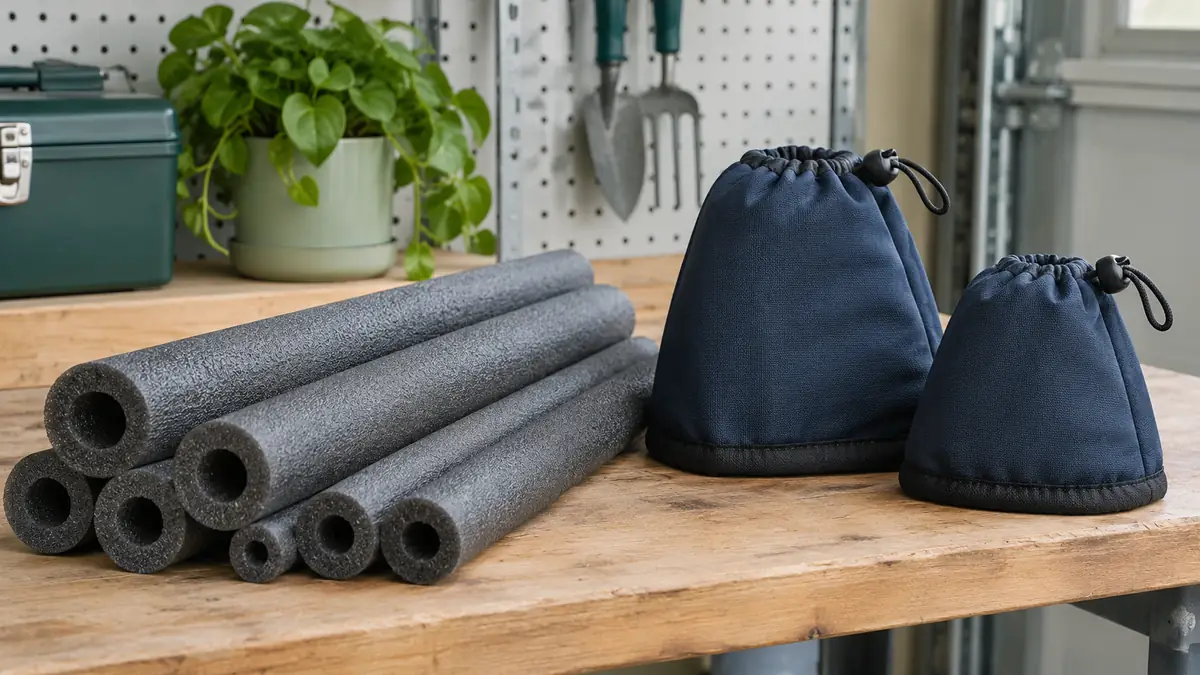
- Stock pipe wrap, faucet covers, frost cloth and extra drinking water.
- Save the freeze night steps for the day a hard freeze shows up in the forecast.
The longer version
The cold can turn up fast in North Texas. A mild week can end with a freeze in the forecast, and the hardware store gets crowded.
This guide is the calm version. You walk the house once while it's still nice out, write down what's missing, and fix it on your own time. The freeze night jobs, like dripping faucets, can wait for a different guide.
Tom in Garland kept a space heater right beside the couch, because that's where the family sat on cold evenings. Fire officials warn about exactly that setup. The U.S. Fire Administration found that portable heaters caused only 3 percent of home heating fires from 2017 to 2019, yet 41 percent of the deadly ones. Tom moved the couch back, gave the heater clear floor on all sides, and turned it off whenever he left the room.
Why it matters here
The same USFA page says heating was the second leading cause of home fires in 2021, with an estimated 32,200 fires, about 190 deaths and $442 million in property loss.
Supplies and help run short when the cold arrives. Texas A&M AgriLife says pipe wrap and heat tape often sell out once freeze warnings go out. After the February 2021 freeze, The Dallas Morning News reported plumbers booking about a month out. ENERGY STAR makes the same point about heating contractors, who get busy once winter comes.
Each step, explained
Check the weatherstripping
Weatherstripping is the rubber or foam strip that seals the gap between a door and its frame. The Department of Energy says worn weatherstripping lets more air leak as a door ages, and that it's worth checking to see if it needs replacing. Look at the strips on each exterior door, including the one from the garage. Flattened, cracked or missing pieces are the signs.
The same page says a steel door with a magnetic strip needs nothing more if it's installed right and not bent. Sliding glass doors are different. You can't stop every bit of air around them and still slide the door, but you can replace worn strips where the maker allows it. The usual mistake is checking only the front door.
Look at the sprinkler sensor and the meter box
The rain and freeze sensor is a small gadget that tells the sprinklers to stay off in bad weather. Dallas requires one by city ordinance, and Fort Worth Water asks you to check its battery. Fort Worth also says to keep the lid on your water meter box so the meter doesn't freeze.
While you're out there, show everyone in the house where the main water shutoff is. Fort Worth says everyone should know, and that you should test the valve now.
Have the heating system checked
ENERGY STAR says a contractor's pre-season visit covers the things most of us can't see, like gas connections, burner combustion and the heat exchanger. It calls bad gas or oil connections a fire hazard. Gas work belongs to a licensed pro, so book the visit and let them do it.
You can handle the filter yourself. ENERGY STAR says a dirty filter can raise energy costs and wear out equipment early. If the filter looks gray, swap it, and I'll remind you when it's due again. Write the filter size on a strip of tape and stick it to the furnace, so you never have to guess at the store.
Test the smoke and CO alarms
Press the test button. USFA says a dead or missing battery is the same as having no alarm, and that a smoke alarm needs replacing 10 years after it was made, the whole unit and not just the battery. The date is printed on the back, so take the alarm down and read it. USFA also wants alarms inside and outside each bedroom and on every level, including the basement.
The Consumer Product Safety Commission says CO alarms belong on each level and in the hallway near the bedrooms. It notes that furnaces, room heaters, water heaters and ranges can all produce CO.
Keep heaters and fireplaces clear
USFA says to keep anything that can burn at least 3 feet from every heat source, fireplaces and wood stoves included. Turn space heaters off when you leave the room or go to bed. Plug them straight into the wall, not an extension cord. Never use the oven to heat the house.
If you burn wood, USFA says to have a professional clean and inspect the chimney, vents and heating equipment. Roof work is not a do-it-yourself job, so the pro goes up there and you stay on the ground.
Stock the shelf
Buy the freeze supplies while the shelves are full: foam pipe covers, faucet covers and a frost cloth for tender plants. Fort Worth also says to store extra water in case a main break or frozen pipe cuts off service.
Keep it all in one bin by the back door, with a notepad on top. When you find something missing during your walk through, write it down right there.
When a hard freeze shows up in the forecast, switch to the freeze night steps in our freeze prep guide. This guide is the setup, and that one is the night itself.
If your shelf is short, here are faucet covers on Amazon and pipe covers on Amazon.
What people get wrong
Many people wait for the forecast to shop. By then the covers and wrap are often gone, so buy them early and keep them in the bin.
Some people never read the date on the alarms. A working-looking alarm can still be past its 10 years, so check the back and replace the whole unit if it's old.
People often crowd the heater because that's where the cold feels worst. Give it 3 feet of clear space and turn it off when you leave the room.
Running a generator in the garage is a dangerous mistake. CPSC says a portable gas generator should never run inside the home, and it names the garage as a source of deadly CO. Keep it outdoors.
Plenty of people skip the filter because the furnace seems fine. A gray filter is your cue to swap it.
When to call a pro
Call a licensed pro for anything involving gas, including the heating system check and any gas smell. Call a licensed electrician for panel or wiring problems. Have a pro handle the chimney inspection and any roof work. Call a licensed plumber if you see a crack, a leak, or a frozen pipe you can't reach. If you'll be away for a long stretch, Fort Worth says to have a plumber prepare the pipes.
As an Amazon Associate, My Home Mentor earns from qualifying purchases. Your price stays the same.
Sources
- U.S. Fire Administration, Heating fire safety. Checked Nov 20, 2026.
- U.S. Fire Administration, Smoke alarms. Checked Nov 20, 2026.
- Consumer Product Safety Commission, Carbon monoxide, the invisible killer. Checked Nov 20, 2026.
- U.S. Department of Energy, Energy Saver, Doors. Checked Nov 20, 2026.
- ENERGY STAR, Heating and cooling maintenance checklist. Checked Nov 20, 2026.
- Fort Worth Water Department, Frozen pipes. Checked Nov 20, 2026.
- Dallas Water Utilities, Winter prep bill insert, 2025. Checked Nov 20, 2026.
- Texas A&M AgriLife Today, Protect livestock, plants, pipes and pets from winter weather. Checked Nov 20, 2026.
- The Dallas Morning News, March 28, 2021, plumbing and hardware businesses after the freeze. Checked Nov 20, 2026.
I'll remind you when it's time.
Sign up, and I'll send you the job when your house needs it, with a short guide.
Reminders by text and email when your house needs them.
General information only, not a substitute for a licensed pro.