
How do I flush my AC drain line?
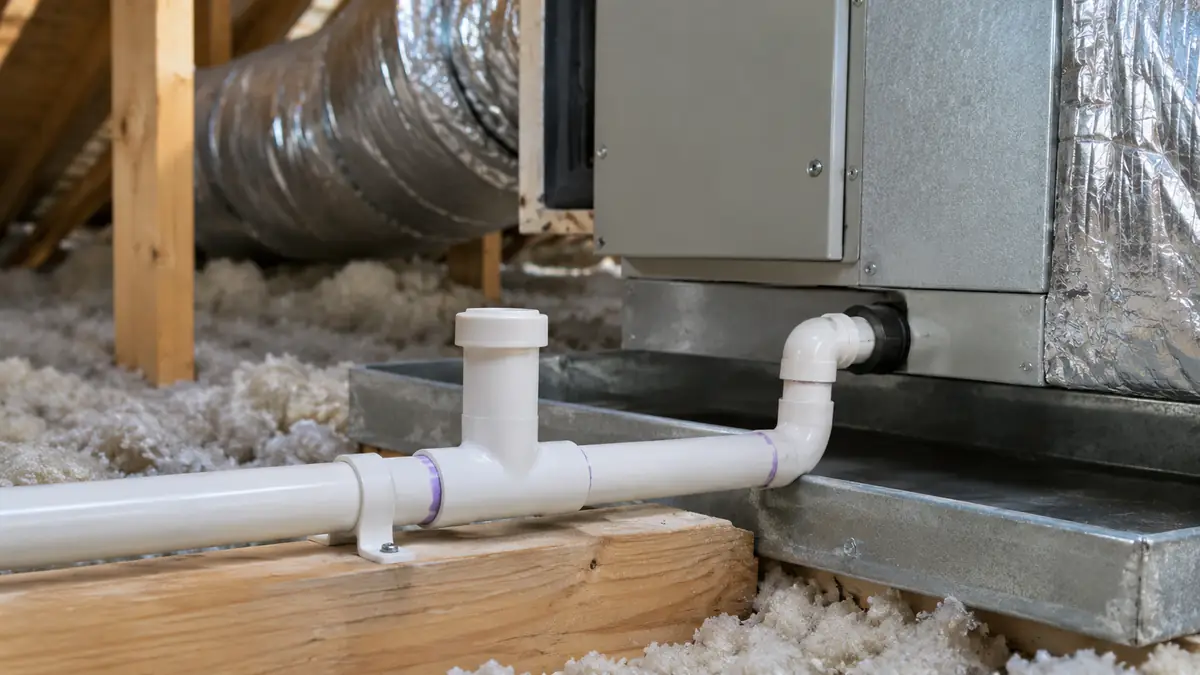
Turn the AC off, find the capped opening on the drain pipe near your indoor unit, and pour in a vinegar mix. Lennox says to let it sit for 30 minutes or longer, then flush it with water. If the line stays clogged or the pan keeps filling, call a licensed HVAC pro.
Quick steps
- Turn the AC off at the thermostat, and at the breaker if you can.
- Find the white or gray pipe near the indoor unit, the one with a cap on it.
- Take the cap off and shine a flashlight inside.
- Pour in a cup of vinegar mixed into a gallon of warm water.
- Wait at least 30 minutes, then flush with plain water.
- Put the cap back, turn the AC on, and look for water at the outdoor end of the line.
The longer version
Your AC makes water all day long. You never see it, because a little pipe quietly carries it away. That pipe is what we're flushing.
Dana in Plano heard her AC kick on one afternoon and saw a steady drip outside her kitchen window. It wasn't rain. It was the backup drain line doing its job, because the main line inside had clogged with dust and slime. A North Texas home inspector describes this exact setup. Dana turned the AC off, flushed the main line, and the dripping stopped.
Why it matters here
A lot of North Texas homes keep the indoor unit up in the attic, and that's where a clog does the most damage. A Texas electric co-op says many homes in its area have the unit in the attic, and that backed up moisture can leak or overflow and damage the system, nearby items and attic ceilings.
The amount of water is bigger than most people guess. One trade article figured a 3-ton system drains about 27 gallons in 24 hours, enough to bring a ceiling down. That article is from 2005, so treat the number as a rough picture.
Water isn't the only problem. ENERGY STAR says a plugged drain can cause water damage and change the humidity inside the house. Lennox adds that standing water can rust the pan, and a clog can bring mold and musty smells out of the vents.
Each step, explained
Turn the AC off
Set the thermostat to Off first. Carrier says to shut the power off at the breaker or disconnect box before you work on the system. Lennox points out that water and electricity are a risky mix. This takes a minute.
Find the drain line and its cap
Start at the indoor unit, the big metal cabinet where your air filter lives. Next to it you'll see a 3/4-inch PVC pipe, usually white, gray or black. The opening often sticks up with a PVC cap on it, and the unit may be in the attic, a closet or the garage. The pipe runs from there to a drain or outside the house, which is why Carrier calls it the condensate line.
A Department of Energy Building America guide describes a cleanout with a removable cap on the trap, the U-shaped bend in the pipe. That's the kind of cap you're looking for. If you can't spot one, skip to the pro section below.
Once you find the cap, snap a photo of it with your phone. Next time you won't have to hunt around in a dark attic.
Look inside
Take the cap off and shine a flashlight down the pipe. Lennox says to look for debris, mold or blockages. If you see a clog, don't poke it deeper. Lennox warns against pushing it farther into the line.
Pour in the vinegar mix
Mix one cup of vinegar into a gallon of warm water, the recipe the Texas co-op gives, and pour it in slowly. Carrier suggests distilled vinegar, and warns that hot water should be hot, not boiling. Skip the bleach. Green Building Advisor's writer says bleach can cause a host of problems.
Wait, then flush
Give it at least 30 minutes. Then pour plain water through to rinse everything along. The whole job takes a little under an hour, and the co-op puts it at 30 minutes to an hour.
Before you flush, walk outside and find where the drain pipe ends. Carrier says some clogs come out with a wet/dry vacuum held at that outdoor opening. If water runs out there when you flush, you're done.
Check the pan and put the cap back
The pan sits under the indoor coil and catches the water. Water sitting in it means the drain isn't working, according to Lennox. Many attic systems also have a second pan underneath, about two inches deep. Put the cap back on, turn the AC on, and watch for water at the outdoor end.
Know your safety switch
Many systems have a small float switch in or near the pan. It works like a sump pump float, and Trane says it shuts the system down when the water gets too high. So if your AC quits on a hot day, a clogged drain is one possible reason.
Some homes don't have one. Trane says without a safety switch the pan can overflow and damage ceilings or drywall. A tech can add one during a drain visit.
What people get wrong
The most common slip is blowing air through the line to clear it. A trade article on stopped lines warns that pushing air in sends the dirt back toward the pan, where it can clog the drain hole again. Pull the clog out with a wet/dry vacuum instead.
Another one is hiding the backup line. The inspector's article says some people extend the PVC down the wall to keep water off the siding instead of finding the cause. That backup line is your warning light. If it drips, the main line needs flushing.
The third is treating the attic pan as a chore. Green Building Advisor says emptying that pan should never be a regular maintenance item. If water keeps showing up there, the drain needs work.
The last is thinking vinegar fixes everything. Carrier says many clogs are not the slimy kind, so vinegar may not stop every blockage. When it doesn't work, that's the cue to call someone.
When to call a pro
Call a licensed HVAC technician if the clog won't budge, the pan keeps filling, or the AC shuts itself off. Lennox also lists recurring clogs, musty odors, a line that's hard to reach, and water damage as reasons to call. If you see water stains on a ceiling, turn the AC off and call right away. Trane says DIY repairs on the unit itself could void a warranty, so a unit under warranty is another reason to call first.
Sources
- Lennox, AC Drain Line Clogged. Checked Nov 20, 2026.
- Carrier, How to Clean AC Drain Line. Checked Nov 20, 2026.
- Trane, HVAC Troubleshooting: Air Handler Overflow Switch. Checked Nov 20, 2026.
- Trane, HVAC Troubleshooting: AC Drain Line Clogged. Checked Nov 20, 2026.
- Guadalupe Valley Electric Cooperative, Condensate Drain Maintenance. Checked Nov 20, 2026.
- ENERGY STAR, Maintenance Checklist. Checked Nov 20, 2026.
- Building America Solution Center (US Department of Energy), HVAC Has Corrosion Resistant Condensate Drain Pan. Checked Nov 20, 2026.
- CandysDirt.com, Inspection Tip: Don't be a Drip, Get Your A/C Drain Fixed (Sep 23, 2020). Checked Nov 20, 2026.
- ACHR News, Btu Buddy 28: A Stopped Up Condensate Line (Jul 22, 2005). Checked Nov 20, 2026.
- Green Building Advisor, The Attic Air Handler That Makes Its Own Rain. Checked Nov 20, 2026.
- Green Building Advisor, How to Clean an Air Conditioner Condensate Drain (Jul 8, 2015). Checked Nov 20, 2026.
I'll remind you when it's time.
Sign up, and I'll send you the job when your house needs it, with a short guide.
Reminders by text and email when your house needs them.
General information only, not a substitute for a licensed pro.